Emulsifying Wax NF vs BTMS-50 vs Olivem 1000
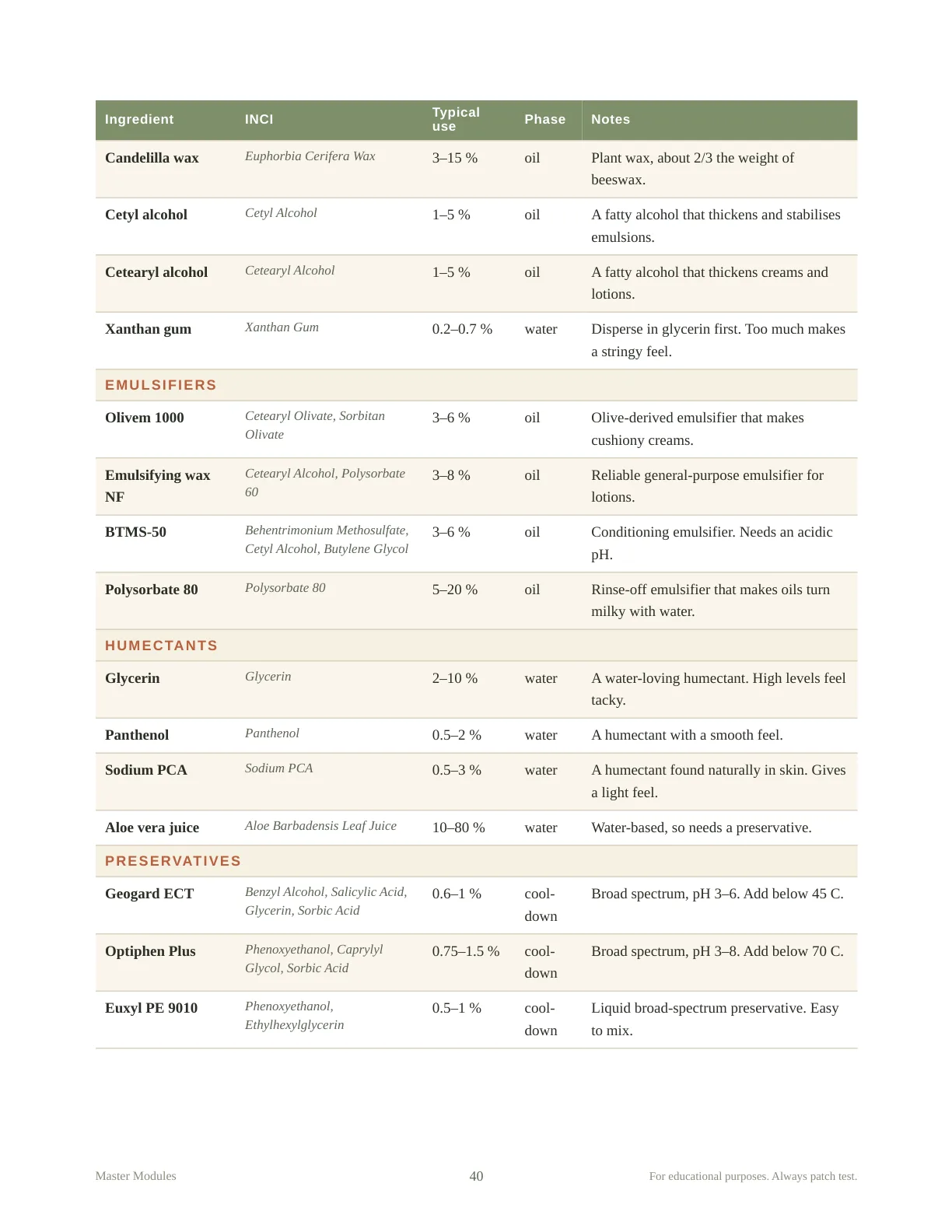
An emulsifier is the ingredient that keeps oil and water from separating, and the three that homemade lotion makers meet first are emulsifying wax NF, BTMS-50 and Olivem 1000. They work in the same way but behave differently in the pot and on the shelf. The table below puts the numbers side by side, and the sections that follow explain when to reach for each.
The comparison
| Emulsifying wax NF | BTMS-50 | Olivem 1000 | |
|---|---|---|---|
| INCI | Cetearyl Alcohol, Polysorbate 60 | Behentrimonium Methosulfate, Cetyl Alcohol, Butylene Glycol | Cetearyl Olivate, Sorbitan Olivate |
| Usual use rate | 3 to 8 % | 3 to 6 % | 3 to 6 % |
| Phase | Oil | Oil | Oil |
| What it is | Reliable general-purpose emulsifier | Conditioning emulsifier | Olive-derived emulsifier |
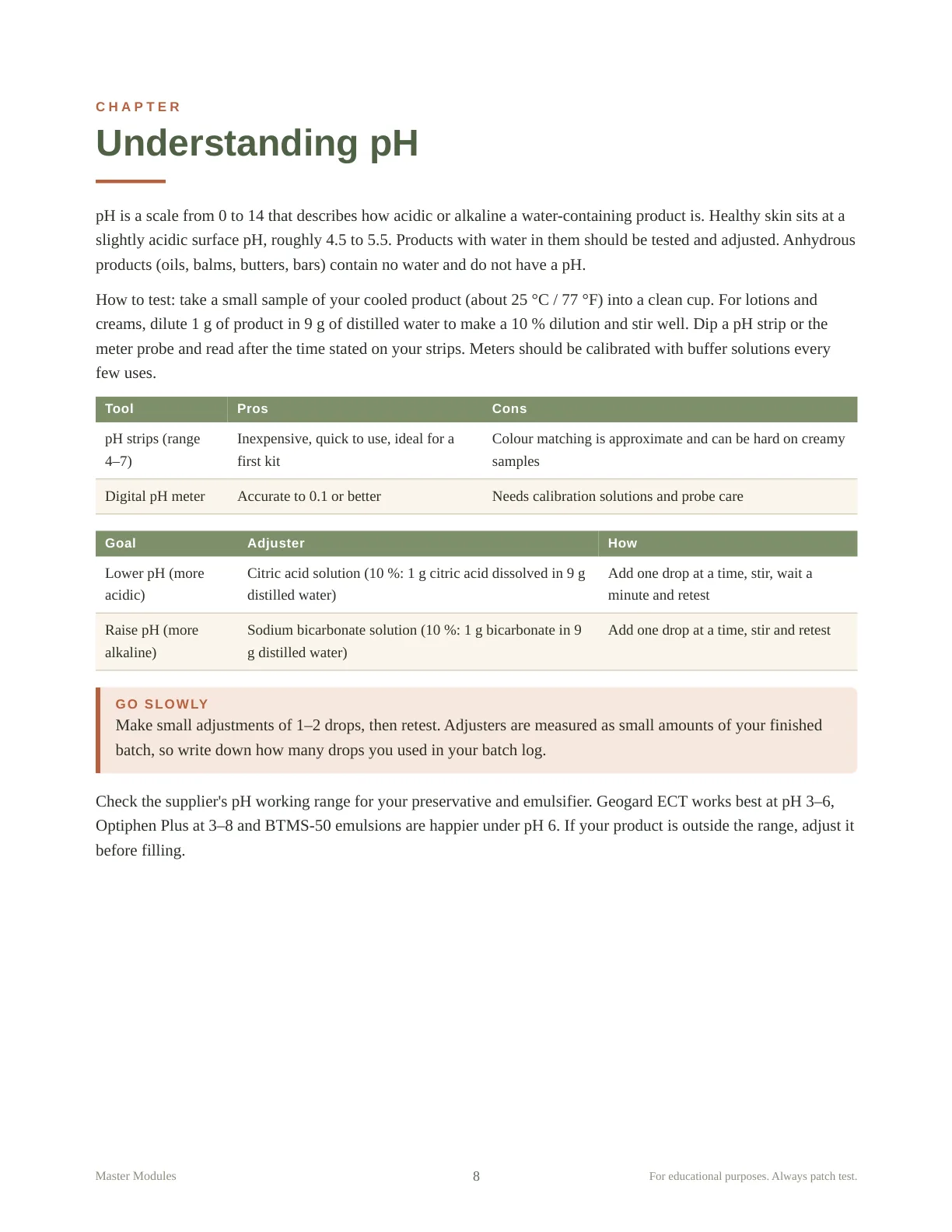
| pH it needs | Formulas in the book target 5.0 to 6.0 (body lotion) or 4.5 to 5.5 (face lotion) | An acidic pH: emulsions are happier under 6, formulas target 4.0 to 5.5 | Formulas in the book target 4.5 to 5.5 |
| Feel noted in the book | Fluid, spreadable, absorbs quickly | Dense, cushiony, conditioning, can leave a powdery finish | Cushiony, light, airy creams |
| Formulas that use it | Everyday Body Lotion (5 %), Everyday Face Lotion | Rich Hand Cream (4 %), Rich Body Cream, Peppermint Foot Cream | Light Face Cream (5 %), Rich Night Cream |
All three go into the oil phase and are heated with it, then blended into the water phase. The method is the same as in how to make lotion.
Emulsifying wax NF
This is the usual starting point. It is a general-purpose emulsifier, and it works with a wide range of oils and butters. The formulary's Everyday Body Lotion uses it at 5 % with 8 % sunflower oil, 3 % shea butter, 4 % caprylic/capric triglyceride, 73.5 % water, 5 % glycerin, 1 % Optiphen Plus and 0.5 % vitamin E. Its target pH is 5.0 to 6.0.
Pick it when you want a first lotion with predictable results and a fluid, spreadable feel.
BTMS-50
BTMS-50 is a conditioning emulsifier. It is cationic, so it behaves differently from the others, and the formulary notes that it needs an acidic pH. In the Rich Hand Cream, the pH step reads: BTMS prefers 4 to 5.5, adjust with a drop of citric acid solution. It also contains cetyl alcohol, and the book's hand cream adds 2 % more cetyl alcohol on top of 4 % BTMS-50.
Pick it when you want a dense, conditioning cream and you are comfortable testing pH. The book notes it can leave a powdery finish.
Olivem 1000
Olivem 1000 is an olive-derived emulsifier that makes cushiony creams. The Light Face Cream uses it at 5 % with 7 % jojoba oil, 6 % sweet almond oil, 3 % shea butter and 1.5 % cetyl alcohol, with 72 % water and 4 % glycerin.
Pick it when you want an airy cream, and you are happy to make a cream and not a pourable lotion.
What about beeswax?
A frequent question is how emulsifying wax differs from beeswax. Beeswax is a structure ingredient, and the formulary files it under thickeners. It gives body to balms, lip balms and lotion bars, which contain no water. Emulsifying wax contains an actual emulsifier, so it can hold water and oil together. Swapping one for the other does not work as a substitution.
Swapping emulsifiers
| If you want to replace | With | How the formulary words it |
|---|---|---|
| Emulsifying wax NF (Everyday Body Lotion) | BTMS-50 at 4 % plus 1 % cetyl alcohol | A listed swap |
| Olivem 1000 (Light Face Cream) | Emulsifying wax NF at 4 % | A listed swap |
Because the pH window changes with the emulsifier, retest the finished product after a swap. Make a small batch first and judge it the next day, since lotions keep thickening for about 24 hours after you make them.
Check the preservative and the pH
An emulsion is water-based, so it needs a broad-spectrum preservative. Each preservative has its own pH range: Geogard ECT works at about pH 3 to 6, Optiphen Plus at 3 to 8 and Euxyl PE 9010 at roughly 3 to 10. Match the emulsifier's pH needs and the preservative's window before you pour. See preservatives for homemade skincare for the full list.
If your emulsion separates
- Check both phases reached the same temperature (70 to 75 °C / 158 to 167 °F).
- Blend for 2 to 3 minutes, and keep stirring while it cools.
- Check the emulsifier percentage against its range.
- For thickness, adjust cetyl or cetearyl alcohol by 0.5 to 1 %.
All 46 ingredients in one place
The three emulsifiers above each have a page in the ingredient guide of The Natural Skincare Formulary, with INCI name, use range and phase. The same guide covers polysorbate 80, the fatty alcohols, humectants and more, and you can browse the set in the natural skincare ingredients guide.